RESEARCH AREA

Robotics

UH researchers affiliated with the HPE Data Science Institute are developing microscopic millibots to full-blown exoskeletons in pursuit of outcomes that have huge impact in people’s day-to-day lives. Our robotics researchers have engaged in multi-institutional and cross-disciplinary partnerships to pursue intelligent machine design through several well-funded research programs.

HPE DSI Affiliates

Affiliates listed here have identified this topic among their research areas. Explore each profile to learn more about their work and expertise.

Listed automatically from Faculty Member content tagged to this research topic.

Assistant Professor
Civil and Environmental Engineering
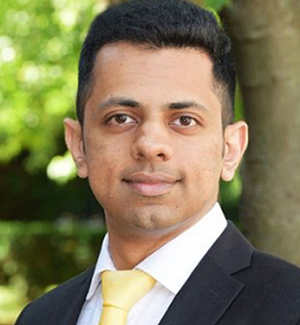
Vedhus Hoskere's current research interests are highly interdisciplinary, at the intersection of civil engineering, computer science and robotics. His doctoral work at the University of Illinois with Billie F. Spencer Jr. focused on developing…
Professor
Electrical Engineering
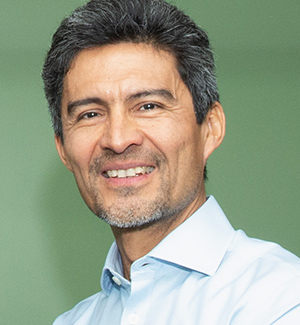
Reverse engineering the brain, Rehabilitation robotics, Brain-Machine Interface, Neuroprosthetics and wearable exoskeletons, Regulatory Science of Biomedical Devices, Neuroaesthetics, Big NeuroData, Arts in Medicine, Reverse Engineering the Brain.
Professor
Computer Science
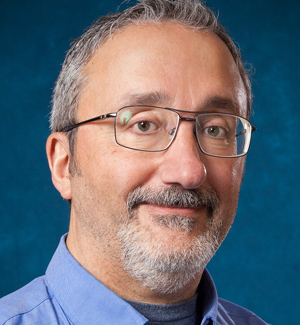
Dr. Pavlidis‚ current research interests involve computational medicine, where he is charting new territory. He developed a series of methods to compute vital signs of subjects in an automated, contact-free, and passive manner. Dr. Pavlidis…
Assistant Professor
Electrical Engineering
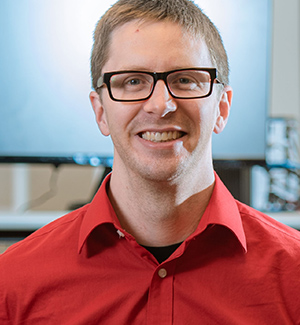
Broadly speaking, our lab solves problems by using many robots.  Our ‘robots’ range from complex modern humanoid robots to extremely simple particles steered by broadcast signals such as the magnetic field of an MRI scanner or a gravitational…

No related news yet for this research area.

Vedhus Hoskere

Vedhus Hoskere
Assistant Professor
Civil and Environmental Engineering
Faculty Bio

Vedhus Hoskere's current research interests are highly interdisciplinary, at the intersection of civil engineering, computer science and robotics. His doctoral work at the University of Illinois with Billie F. Spencer Jr. focused on developing artificial intelligence, machine learning and computer vision solutions for rapid and automated civil infrastructure inspection and monitoring. For his research toward automated post-earthquake building inspections, Hoskere received the Liu Huixian Earthquake Engineering Scholarship in 2018. 

News

July 11, 2026
Vedhus Hoskere has received a five-year, nearly half-million-dollar Faculty Early Career Development Program award from the NSF.
March 5, 2026
Team Introduces New Method to Improve Damage Detection

Jose Luis Contreras-Vidal

Jose Luis Contreras-Vidal
Professor
Electrical Engineering
Faculty Bio

Reverse engineering the brain, Rehabilitation robotics, Brain-Machine Interface, Neuroprosthetics and wearable exoskeletons, Regulatory Science of Biomedical Devices, Neuroaesthetics, Big NeuroData, Arts in Medicine, Reverse Engineering the Brain.

Research Areas

Research Topics

News

March 26, 2026
Research Indicates Urgent Need to Integrate Nature into Urban Design to Increase Brain Capital

Ioannis Pavlidis

Ioannis Pavlidis
Professor
Computer Science
Faculty Bio

Dr. Pavlidis‚ current research interests involve computational medicine, where he is charting new territory. He developed a series of methods to compute vital signs of subjects in an automated, contact-free, and passive manner. Dr. Pavlidis originated multiple patents and is considered one of the founders of modern lie detection technology. His research is cited extensively in scientific literature and receives significant coverage from international media outlets, including CNN, the Discovery Channel, Reuters, Time magazine, and the L.A. Times. Dr. Pavlidis is a Fulbright Fellow, a senior member of IEEE, and a member of the ACM. He also serves as associate editor for the journal Pattern Analysis and Applications and has chaired numerous major IEEE conferences.

Research Areas

Research Topics

News

April 8, 2026
A new University of Houston study presents a general, falsifiable framework for assessing competition quality and fairness.

Aaron Becker

Aaron Becker
Assistant Professor
Electrical Engineering
Faculty Bio

Broadly speaking, our lab solves problems by using many robots.  Our ‘robots’ range from complex modern humanoid robots to extremely simple particles steered by broadcast signals such as the magnetic field of an MRI scanner or a gravitational field.

Research Areas

Research Topics